
Global food supply chains are entering a period of greater uncertainty. Geopolitical conflict, extreme weather, energy costs, water stress, storage constraints and food waste are creating pressure across the journey from farm to consumer. For food manufacturers and brands, this makes packaging more than a presentation tool: it is part of the system used to protect product quality during storage, handling and distribution.
In July 2026, reporting on J.P. Morgan's analysis highlighted the combined risks of geopolitical disruption, extreme weather and higher energy costs. The bank estimated that a very strong El Niño could add around 0.7 percentage points to global food inflation at its peak, with the combined impact of weather and energy shocks potentially pushing food inflation to around 5% in the first half of 2027.
This should not be interpreted as a certainty that a global food crisis will occur in a particular month or year. It is, however, an important signal for food manufacturers, importers, retailers and packaging buyers: when food becomes more expensive and supply chains become more vulnerable, protecting the food that has already been produced becomes increasingly important.
That is where packaging has a role to play. Better food packaging cannot solve global food insecurity, but it can help protect food quality and reduce avoidable losses within the part of the supply chain that manufacturers and brands can directly influence.
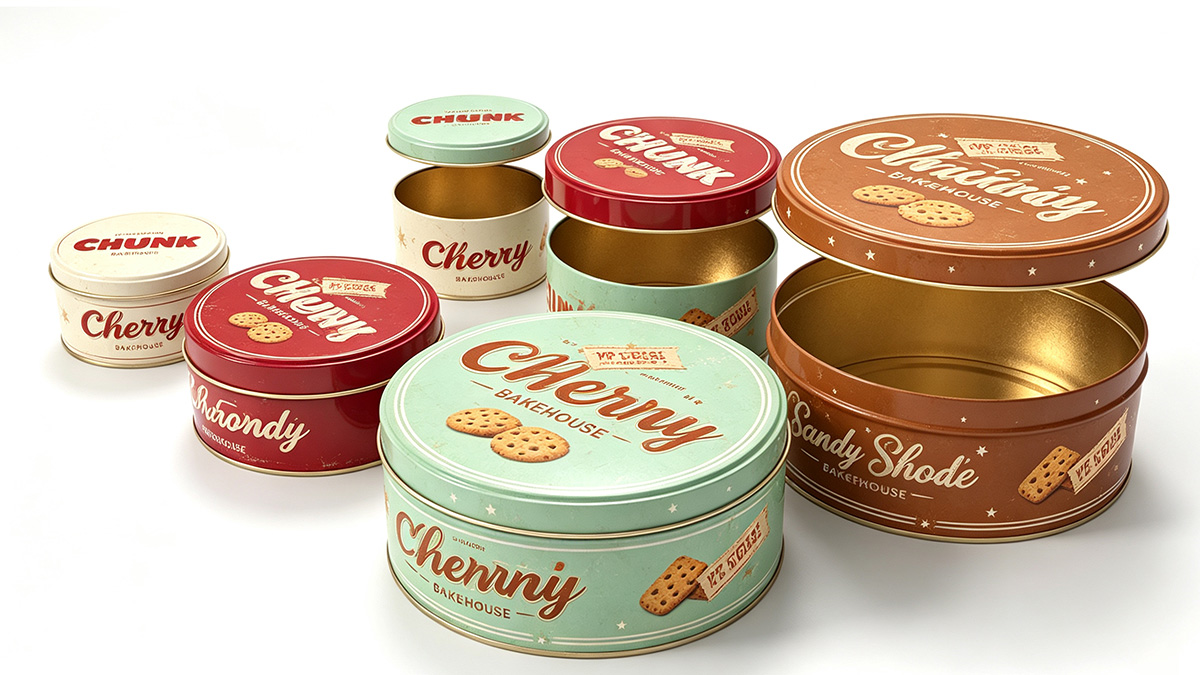
Food Security Is Also About Protecting Food After Production
Food security is often discussed in terms of agricultural production, water availability, fertilizer, trade and reserves. But food must still pass through processing, packaging, warehousing, transportation, distribution, retail and final consumption before it reaches the consumer.
Loss or quality deterioration can occur at any of these stages.
For packaged foods, exposure to oxygen, moisture, light, temperature changes and physical impact can affect product quality. FAO guidance notes that packaging barrier properties can protect food from gases, light and water vapour that may contribute to oxidation, colour changes, quality deterioration and moisture-related problems.
This means food packaging is not simply a container. It is part of the food protection system.
For biscuits, cookies, chocolate, confectionery, coffee, tea, nuts, dried fruit, spices and other dry or premium foods, choosing an appropriate packaging format can be an important part of managing storage and distribution risk.
What Is Tinplate Food Packaging?
Tinplate is a steel sheet coated with a thin layer of tin. The steel provides strength and rigidity, while the tin coating helps protect the steel substrate from corrosion. FAO describes tinplate as a rigid and impervious material and notes that its mechanical properties can be controlled to suit food-container requirements.
For modern tinplate food packaging, the final performance depends on much more than the metal itself. Food compatibility, coating selection, coating integrity, closure design, processing conditions and storage conditions all matter. FAO guidance specifically identifies factors such as coating, food composition, oxygen, processing temperature, storage temperature and humidity as relevant to metal food packaging performance.
When the material, internal coating and structure are correctly selected for the intended food application, tinplate can offer a combination of barrier protection, rigidity, durability, visual appeal and reusability that is difficult to achieve with a single-purpose disposable package.
1. Strong Barrier Protection Against Light, Moisture and Oxygen
One of the most important advantages of metal food packaging is its barrier capability.
Light can affect sensitive foods and ingredients. Moisture can cause biscuits and powders to lose their intended texture or form lumps. Oxygen can contribute to oxidation and quality deterioration in susceptible products.
Metal packaging provides an opaque, highly protective barrier. FAO materials describe metal cans as impervious to oxygen, moisture and aroma compounds, while also emphasizing that actual food-packaging performance depends on the specific construction and processing conditions.
For brands selling products through long distribution chains, this protective barrier can be particularly valuable.
The goal is not to make an unrealistic promise that a tin box automatically extends every product's shelf life. Instead, the goal is to create a packaging environment designed to protect product quality under the intended storage and distribution conditions.
2. Excellent Mechanical Protection During Transportation
International food products may travel thousands of kilometres before reaching consumers.
A package can be exposed to:
- Long-distance ocean and road transportation
- Multiple loading and unloading operations
- Warehouse stacking
- Vibration and impact
- Temperature fluctuations
- Humid or dry environments
- Extended retail storage
Because tinplate is steel-based, it provides a rigid structure that can offer strong mechanical protection compared with many lightweight flexible formats.
FAO notes that the strength and rigidity of tinplate make it an effective material for food containers.
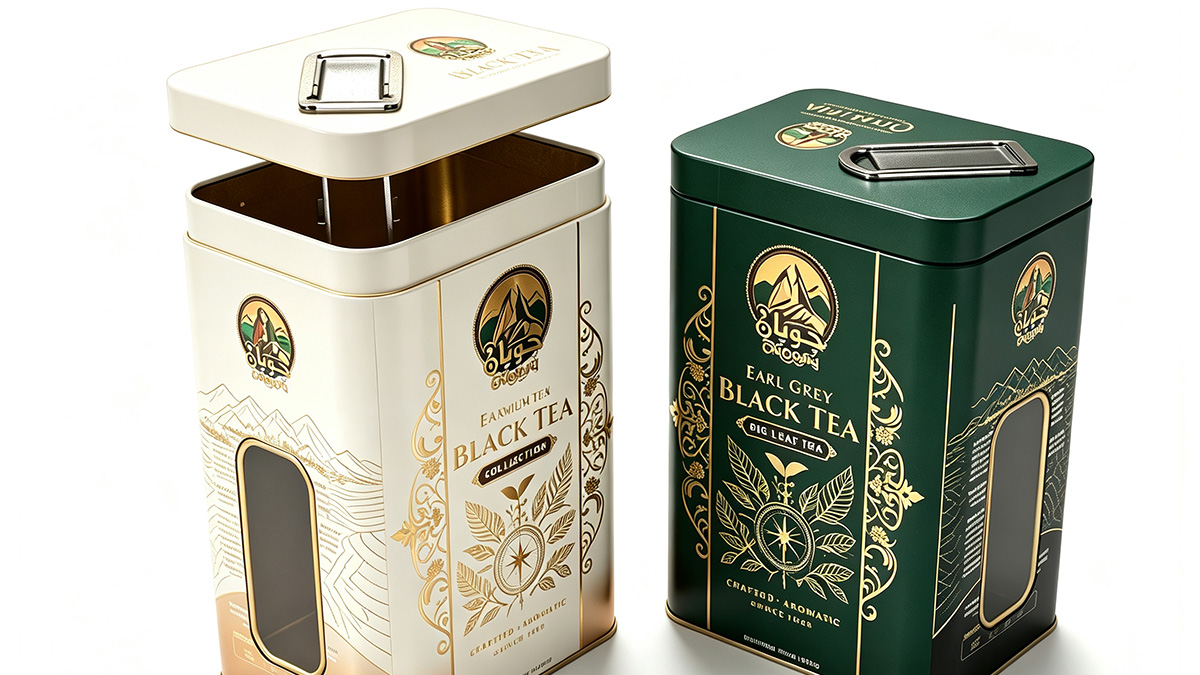
For premium biscuits, confectionery, coffee, tea, nuts and gift foods, a robust tin box can therefore serve two purposes at once: protect the product and create a premium presentation.
3. Better Protection Can Support Food-Waste Reduction
Food waste is not only a consumer problem. Losses can occur during processing, storage, distribution and retail.
When food is damaged or loses commercial quality, the resources used to produce and transport that food are also effectively wasted — including water, energy, agricultural inputs, labour and logistics capacity.
Packaging cannot solve food waste by itself. However, appropriate packaging can help control some causes of deterioration and physical damage.
This is why the value of food packaging should increasingly be considered beyond its unit price.
The more useful question is:
How much value can the package protect throughout the product's supply chain?
4. Reusable Tin Boxes Create Value Beyond the First Use
Another important advantage of custom tin packaging is its potential for reuse.
Unlike many disposable food packages, a well-designed tin box can remain useful after the original product has been consumed.
Consumers can reuse food tins for:
- Tea and coffee
- Cookies and confectionery
- Nuts and snacks
- Spices and dry ingredients
- Stationery
- Small household items
- Seasonal gifts and keepsakes
This creates a second life for the package and gives brands an additional opportunity to remain visible in consumers' homes.
For premium food and gift brands, reusability can turn packaging from a short-term container into a longer-term brand asset.
5. Tinplate Packaging Combines Protection With Brand Experience
Food packaging has two jobs.
The first is functional: protect the product.
The second is commercial: communicate why the product is worth buying.
Custom tin packaging can support both objectives through high-quality offset printing, embossing, debossing, special shapes, structural details and premium finishes.
A tin box can be designed around a seasonal campaign, a tourism destination, a limited-edition product, a gift collection or a permanent brand identity.
For chocolate, biscuits, coffee, tea, confectionery and premium food gifts, this creates a strong combination of:
Food Protection + Shelf Presentation + Brand Recognition + Reusability
6. Why Tin Food Packaging Is Relevant to Global Markets
Packaging requirements vary by product, distribution model and destination market.
Middle East
Food products distributed across the Middle East may encounter high temperatures, long transportation routes and extended storage periods. Packaging design therefore needs to consider product protection, coating compatibility, closure integrity and logistics conditions.
Southeast Asia
High temperature and humidity can create additional challenges for moisture-sensitive foods. A properly engineered metal package can provide a strong physical and environmental barrier, subject to the specific product and packaging design.
Europe
European food brands increasingly balance product protection, premium design, material efficiency, recyclability and consumer expectations. Reusable metal packaging can provide an attractive option for premium and gift-oriented products.
North America
Long distribution distances and sophisticated retail channels make packaging durability, product protection and shelf presentation important considerations for many food brands.
The key principle is simple:
The right food packaging should be designed for the product and for the supply chain the product will actually experience.
7. Tinplate vs. Other Packaging Materials: Why Application Matters
There is no universal “best” packaging material for every food product.
Plastic, paperboard, flexible laminates, glass and metal all have applications where they perform well. The correct choice depends on the food, filling process, required barrier performance, expected shelf life, distribution environment, sustainability objectives and target cost.
Tinplate becomes particularly attractive when a brand needs a combination of:
- High rigidity
- Strong light protection
- High barrier performance
- Physical durability
- Premium printing and decoration
- Reusability
- Distinctive shelf presence
For this reason, custom tin boxes for food are especially suitable for premium, seasonal, promotional and gift-oriented products.
8. The Role of a Modern Food Packaging Supplier Is Changing
Food companies increasingly need more than a factory that can manufacture a metal box.
They need a packaging development partner who can help answer questions such as:
What tinplate structure is suitable for our product?
What internal coating should we consider?
How should the box be designed for transportation and stacking?
How can we create a premium appearance without compromising functionality?
Can the packaging be reused after consumption?
How can the same packaging concept work across different markets and seasonal campaigns?
A capable custom tin packaging manufacturer should therefore provide more than production capacity. It should combine material knowledge, structural engineering, printing, tooling, quality control and packaging development. This is particularly important for export-oriented food brands that need packaging adapted to different products, climates, logistics routes and retail positioning.
Why Work With CREPACKING?
CREPACKING focuses on custom tin packaging for food, confectionery, coffee, tea, biscuits, chocolate, nuts, promotional products and premium gift applications. The company can support projects from packaging concept and structural development through tooling, printing and mass production.
For international buyers, the value of a packaging partner is not simply manufacturing capacity. It is the ability to translate a product requirement into a practical metal packaging solution — considering dimensions, structure, decoration, internal coating requirements, production feasibility, packing efficiency and the intended market.
For brands entering or expanding in the Middle East, Europe, North America and Southeast Asia, this development-oriented approach can make custom tin packaging easier to evaluate and scale.
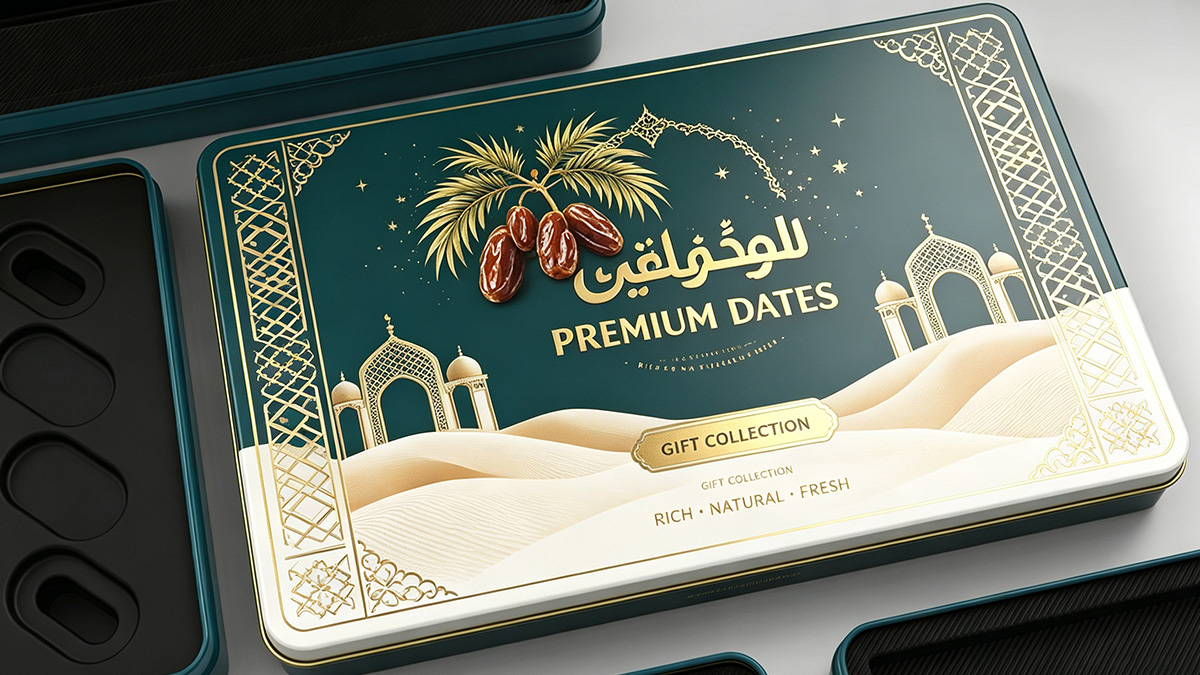
9. The Real Cost of Food Packaging Is More Than the Unit Price
When food prices, logistics costs and supply-chain risks rise, packaging procurement should not be evaluated only on the lowest cost per unit.
A more complete evaluation considers:
Packaging Cost + Product Protection + Logistics Performance + Waste Risk + Brand Value
A package that costs slightly more but provides better protection, reduces damage, improves presentation and remains useful after consumption may deliver greater total value than a cheaper package with limited functionality.
For food brands, the objective should not simply be to buy the cheapest package.
The objective should be to select the packaging solution that delivers the best total value for the product and its supply chain.
10. Why Consider Tinplate Food Packaging Now?
Global food supply risks cannot be solved by packaging alone. Agriculture, water management, energy, logistics, cold chains, warehousing and food production all remain essential parts of food security.
But packaging is one area that food manufacturers can directly influence.
When food becomes more expensive to produce and transport, protecting that food throughout its journey becomes more valuable.
That is why tinplate food packaging deserves renewed attention.
For suitable food applications, a well-engineered tin box can bring together:
Protection — strong physical and light protection.
Barrier Performance — a highly protective metal package when correctly designed and sealed.
Durability — a rigid structure suitable for demanding distribution environments.
Reusability — packaging that can continue to provide value after the original food is consumed.
Branding — a premium canvas for printing, embossing and distinctive structures.
Versatility — suitable for biscuits, cookies, chocolate, candy, coffee, tea, nuts, dried fruit, spices and premium food gifts, subject to product-specific requirements.
Frequently Asked Questions About Tinplate Food Packaging
Is tinplate packaging suitable for food?
Yes, tinplate is widely used in food packaging. However, suitability depends on the food product, internal coating, packaging construction, processing method and storage conditions. Food-contact materials should always be selected and tested for the intended application.
Does a tin box keep food fresh for longer?
A properly designed and sealed metal package can provide strong protection against light and external moisture and can help control exposure to oxygen and other environmental factors. However, shelf life depends on the food formulation, processing, packaging system and storage conditions. A tin box should not be treated as a universal shelf-life extension solution.
What foods can be packaged in tin boxes?
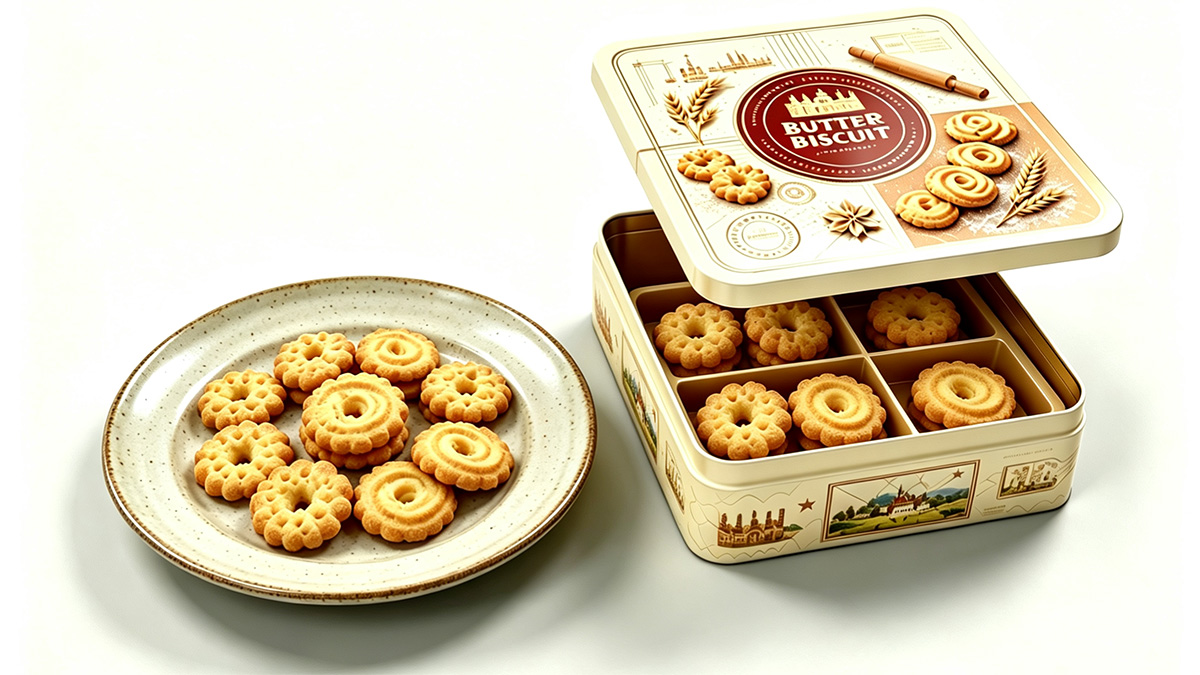
Common applications include biscuits, cookies, chocolate, confectionery, tea, coffee, nuts, dried fruit, spices and premium food gifts. The correct internal coating and construction should be determined according to the specific food and filling conditions.
Are reusable tin boxes environmentally friendly?
Reusability can extend the useful life of a package and create value beyond its first use. However, sustainability should be evaluated across the entire packaging life cycle, including material sourcing, manufacturing, transportation, reuse and end-of-life recycling.
Why choose custom tin packaging instead of standard packaging?
Custom tin packaging allows brands to control the shape, dimensions, artwork, printing, embossing, opening mechanism and overall customer experience. It is particularly useful for premium food, seasonal collections, promotional campaigns and gift packaging.
Is tin packaging suitable for export markets?
Yes. Tin packaging can be suitable for international distribution when the package is correctly engineered for the food, transportation conditions, stacking requirements, filling process and destination-market regulations.
Protect More of the Food We Already Produce
No packaging material can solve the world's food-security challenges on its own.
But as global food supply chains become more complex, protecting food after production becomes an increasingly important part of supply-chain efficiency.
Tinplate food packaging offers food brands a combination of barrier protection, rigidity, durability, premium appearance and reuse potential. For the right products and applications, it can help manufacturers and brands protect product quality while creating a stronger consumer experience.
At CREPACKING, we develop and manufacture custom tin packaging for food, confectionery, coffee, tea, biscuits, chocolate, nuts, dried fruit and premium gift products.
Our capabilities can include:
- Food-grade internal coatings
- High-quality offset printing
- Embossing and debossing
- Custom shapes and structures
- Tooling and mould development
- Structural packaging design
- Custom colours and finishes
- Production for international markets
We work with food brands, distributors, importers and packaging buyers to develop tin packaging that is not only visually distinctive, but also designed around the product's protection, logistics and end-use requirements.
If you are evaluating a new food tin, seasonal gift box, promotional tin or long-term packaging program, CREPACKING can help turn the product concept into a commercially practical custom tin packaging solution.
When food becomes more valuable, protecting it becomes more important than ever.